
AI inference silicon and systems
The shortest path from memory to token
Persimmons builds inference silicon and systems around one geometry: compute bonded directly on its own memory.
The first 3D compute-HBM processor stack. One compute die bonded directly above its own HBM stack. Persimmons bonds compute on top of memory, so data moves microns, and energy per bit drops with the distance; in contrast, competitor side-by-side designs send bits across millimeters of interposer wiring, wasting time and energy.
Multi-trillion-parameter models run on a single hyperchip. Processors bond edge to edge into a hyperchip: one fabric and one address space, with no silicon interposer. Each processor carries its own memory, so memory bandwidth grows with every processor added. Hyperchips scale to air- and liquid-cooled trays and racks.
One architecture, from algorithms to rack
From one processor to a full rack
A 3D compute-HBM processor, a hyperchip, a packaged chip, a server tray and a rack. The software sees the same device at every size.
Transcript
01 Processor: the first 3D compute-HBM processor stack. A compute die bonded directly on top of its own stack of HBM memory dies. 02 Hyperchip: multi-trillion-parameter models on one hyperchip. Many processors bond edge to edge into one device, with no silicon interposer. 03 Package: a fully packaged chip. Many 3D-stacked processors in one package. The compiler sees one device. 04 Tray: into a server tray. The hyperchip sits on a baseboard in the back of a standard server tray, where GPUs would go. 05 Rack: trays fill a rack. Trays slide into a standard rack. The software sees the same device at every size. Persimmons: processor to rack. One architecture, from a single processor to a full rack.
The whole stack, engineered together
Five innovations: algorithms, network on chip, 3D stack, packaging and hyperchip, each built on the one before it.
Transcript
Five innovations, engineered together. Each innovation is possible only because of the one before it. 01 Algorithms: new algorithms for parallel matrix multiplication move data between every processor in the hyperchip. 02 Network on chip: rebuilt around those algorithms, with short hops for the traffic the math needs. 03 3D stack: memory bonded directly to compute. This is the memory-fused processor. 04 Packaging: processors placed side by side with die-to-die links and no silicon interposer. 05 Hyperchip: a hyperchip for multi-trillion-parameter models, in one air- or liquid-cooled 10U tray. Five innovations that work together, designed by one team, from algorithms to system.
One model in a fraction of the rack
The same 2.8-trillion-parameter model: about 1U and 4 kW on a Persimmons hyperchip, against 10U to twenty racks and up to 2.2 MW on other systems.
A rack-scale GPU system joins 72 chips with about two miles of copper cable. In a hyperchip, the interconnect sits inside the device.
Transcript
Take one of the largest open models: 2.8 trillion parameters and 1.56 terabytes of weights. Weights plus working memory need 1.73 terabytes of fast memory. How much rack space and power does that take? Company 1: forty wafers in twenty racks, drawing about 920 kilowatts. Company 2: 3,456 chips in fourteen racks, drawing about 2.2 megawatts. Company 3: twenty-seven chips in two racks, drawing about 40 kilowatts. Company 4: eight GPUs in one 10U server, drawing about 14.5 kilowatts. Persimmons hyperchip: 48 memory-fused processors hold the model in about one rack unit, at about 4 kilowatts and about 21% of Company 4’s cost. Same model, rack space: Persimmons about 1U; Company 4, 10U (10×); Company 3, 2 racks (84×); Company 2, 14 racks (588×); Company 1, 20 racks (840×). Same model, power: Persimmons about 4 kW; Company 4, 14.5 kW (3.6×); Company 3, about 40 kW (10×); Company 1, about 920 kW (230×); Company 2, about 2.2 MW (550×). Every system holds the same 1.73 TB model; bars are drawn to scale. A full 10U tray carries hyperchips for still larger models. A rack-scale GPU system is sold as one giant accelerator. Inside, it is seventy-two separate chips in eighteen trays. To make 72 chips act like one, every chip is wired to every other chip through a copper spine: about 5,000 cables. About two miles of cable in every rack. The model's memory is spread across all 72 chips, so every answer crosses the spine. Persimmons bonds memory-fused processors edge to edge into one hyperchip: one device, one fabric, one address space, with no silicon interposer. The interconnect sits inside the hyperchip, in one air- or liquid-cooled 10U tray. Two miles of copper in a GPU rack. None inside a hyperchip. (Comparison figures: public specifications and vendor power figures; cost shares use third-party market estimates; Persimmons figures are design targets.)
Inference where the workload runs
One processor architecture, one compiler and one runtime, from robots on the factory floor to hyperscale data centers. Customers choose the envelope; the software stays the same.
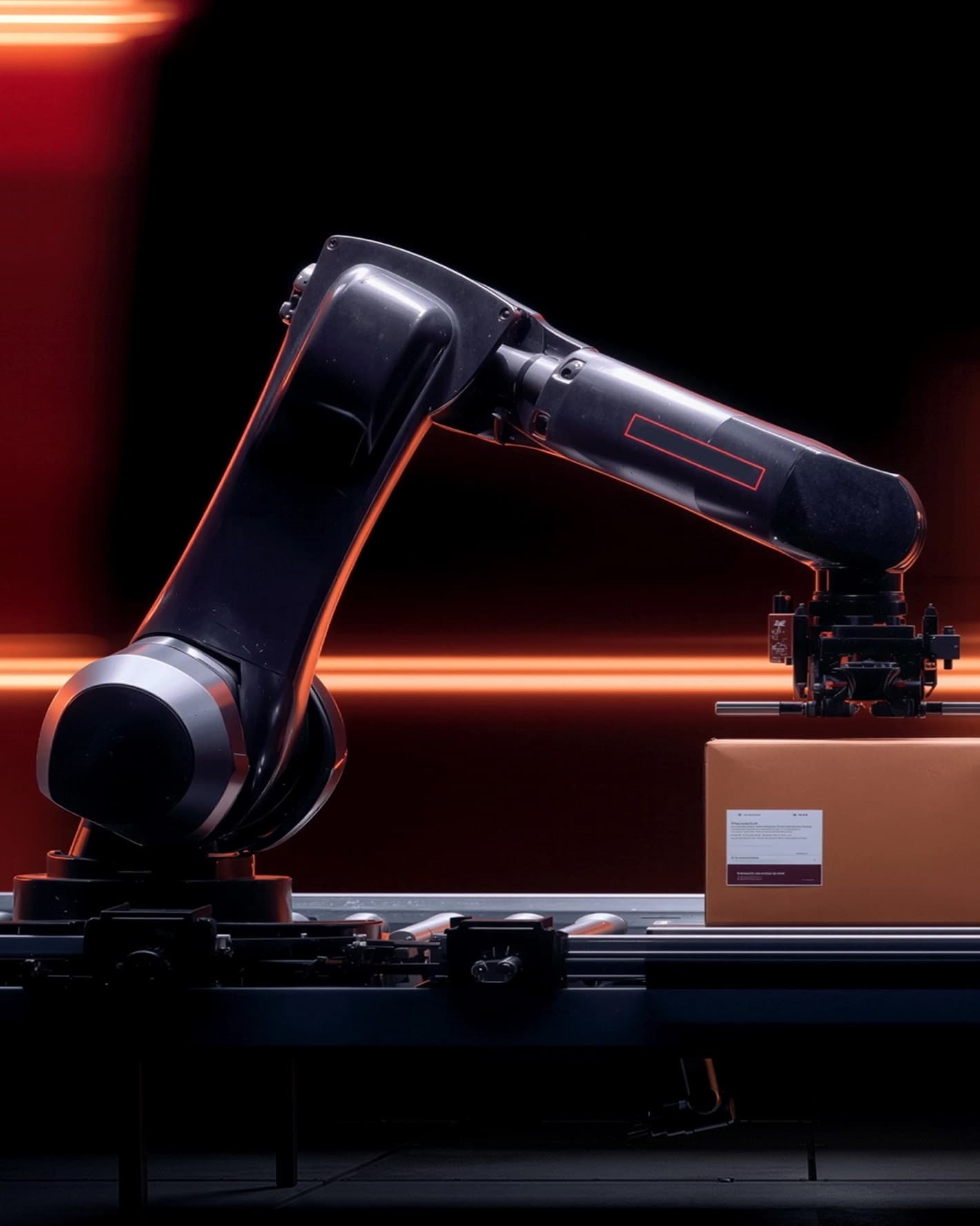
Intelligence on the machine
The exact compute a robotic arm or humanoid needs, for fast, responsive control.
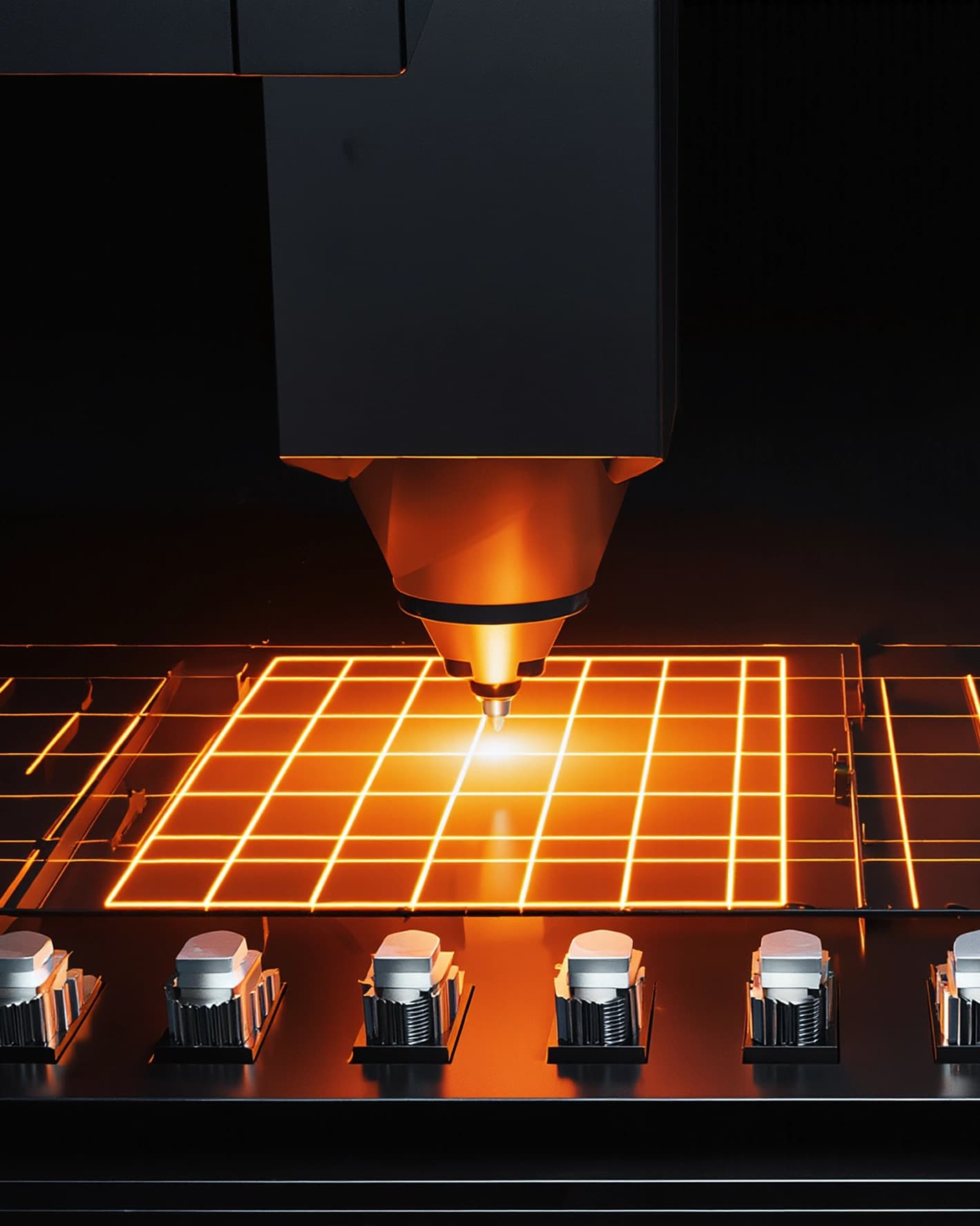
Inference on the factory floor
Low latency at the industrial edge, with no round trip to the cloud.

Intelligence at the tactical edge
Inference from remote outposts to mobile command centers.
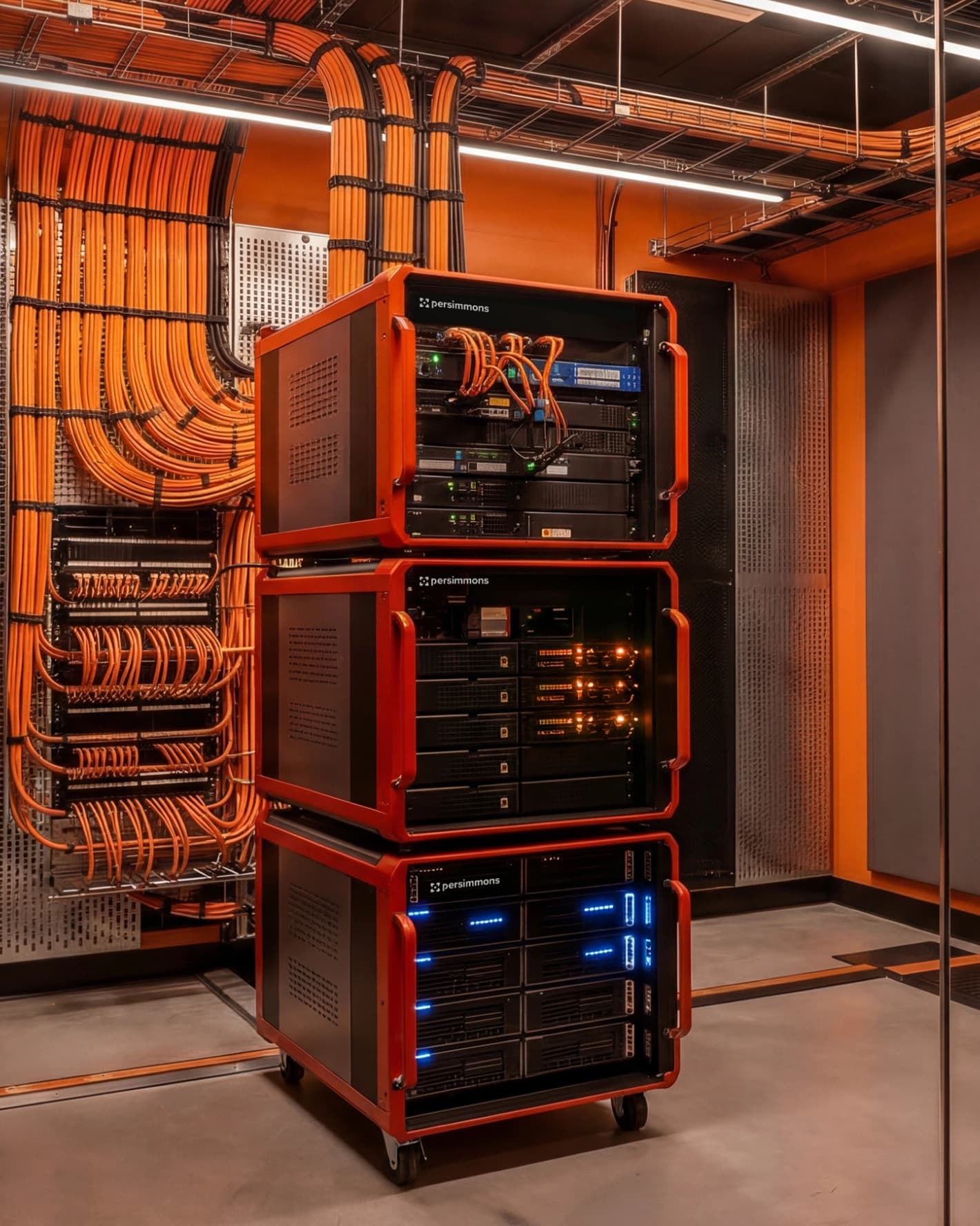
Your premises, your terms
Data-center compute built to your specification, with your data kept in house.

Capacity at data-center scale
Hyperchip trays fit standard racks, to add inference capacity fast in existing halls.
Work with Persimmons
We work directly with teams deploying inference, from the edge to the data center.
Build the next era of intelligence
Silicon, packaging, systems, compiler and runtime, engineered by one team.